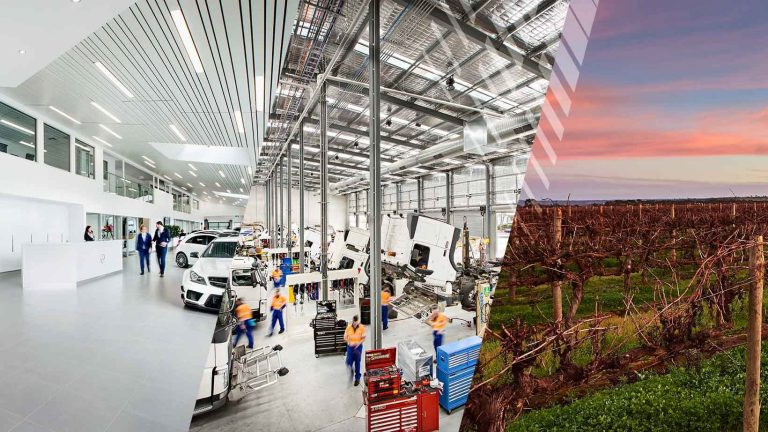
Engineers work out how to make things work: the bridges you drive over, the phone in your pocket, the power that keeps the lights on. If you like maths and science, enjoy solving problems and want to see your ideas get built, engineering could suit you.
There are many kinds of engineering, and each leads to different work. Here’s what engineers do, the main types of engineering careers, what they pay and how to get into one.
What is engineering?
Engineers use science, maths and technology to design, build and improve the things we use every day, from roads and water pipes to medical devices, aircraft and apps.
And it isn’t all hard hats and building sites (though there’s plenty of that). Some engineers spend their day at a computer designing software or control systems; others test medical equipment, plan power networks or work on mine sites. If you’ve ever wanted to design a robot, a cleaner car or the next Sydney Harbour Bridge, there’s a branch of engineering for it.
Trivia
Which engineer was nicknamed “Mr Harbour Bridge”?
John Bradfield, a NSW Public Works engineer, planned the Sydney Harbour Bridge, chose its arch shape, wrote the specifications and supervised the build. It was finished in 1932.
Source: NSW Public Works
What is STEM?
STEM stands for science, technology, engineering and maths. You’ll hear it a lot if you’re interested in engineering, because engineering draws on all four.
STEM skills are behind video games, rockets, renewable energy and new medical devices. If you enjoy experimenting and working things out, STEM subjects at school are a good place to start, whether you end up in engineering or somewhere else.
Is engineering a good career?
For a lot of people, yes. Engineers are needed right now: Jobs and Skills Australia’s 2026 Occupation Shortage List rates civil, electrical, mechanical, aeronautical and biomedical engineers as in shortage across Australia. Engineers work in almost every industry, from energy and mining to healthcare and technology, and the pay is good (there are figures below).
Engineering skills are used all over the world, too, so the work can take you overseas.
Types of engineering careers
Here are eight of the main ones. Where it’s published, the pay is what people in the job typically earn a week working full-time, from Your Career (ABS figures from May 2023). Jobs in the same ABS group share one figure.
Civil engineer
Typical pay: $2,264 a week (Your Career).
Civil engineers design and build roads, bridges, tunnels, water pipes and buildings, and make sure they’re safe and built to last. They shape the cities and towns we live in.
Mechanical engineer
Typical pay: $2,151 a week (Your Career).
Mechanical engineers design machines and the parts that make them move, from engines and robots to air conditioning systems and sports cars. If you love pulling gadgets apart to see how they work, this could be for you.
Electrical engineer
Electrical engineers design power systems, electrical circuits and the networks that keep the lights on, as well as the technology inside phones and computers. (Your Career doesn’t publish a pay figure for this one.)
Software engineer
Typical pay: $2,496 a week (Your Career).
Spend a lot of time on your phone? Software engineers design and build the apps, websites and programs on it. Just about every business runs on software now, so software engineers can work almost anywhere.
Biomedical engineer
Typical pay: $2,502 a week (Your Career).
Biomedical engineers work where engineering meets healthcare, designing medical devices like prosthetic limbs, artificial hearts and MRI machines that help people live better lives.
Aerospace engineer
Typical pay: $2,502 a week (listed as aeronautical engineer) (Your Career).
Love Star Wars, or just fascinated by space? Aerospace engineers design aircraft, satellites and spacecraft, and the systems that keep them flying safely.
Environmental engineer
Typical pay: $2,502 a week (Your Career).
If you want to leave the world better than you found it, this one’s worth a look. Environmental engineers design ways to protect the environment, like clean water systems, renewable energy and pollution control.
Chemical engineer
Chemical engineers design the processes that turn raw materials into products like food, medicines, fuel and cosmetics, so the job can take you into all sorts of industries, even brewing. (Your Career doesn’t publish a pay figure for this one.)
How do you become an engineer?
Study the right subjects at school
Maths, physics and chemistry are the subjects to focus on at school. Many engineering degrees list maths as a prerequisite or assumed knowledge, so check the courses you’re interested in.
Choose an engineering degree
To become a professional engineer, you’ll usually need a four-year engineering degree. There are other ways in, too: a three-year engineering technology degree leads to work as an engineering technologist, and a two-year advanced diploma or associate degree to work as an engineering associate. You can compare courses on ComparED.
Get practical experience
Internships, vacation programs and work experience help you build skills and contacts while you study, and many employers run graduate programs for new engineers. Some also offer cadetships straight after Year 12.
Get registered
Depending on your state and the kind of work you do, you may need to be registered to work as a professional engineer. Queensland, Victoria and the ACT, for example, require registration for certain areas of engineering. Engineers Australia explains the rules in each state.
Ready to start?
Our engineering and architecture page has the jobs, the pay, the pathways in and the employers hiring, including those with internships, cadetships and graduate programs. Not sure which kind of engineering suits you? Try our free career quiz.