What do giant hydro generators, preventing blackouts and university lectures have in common? For Issy and Anna, they’re all part of learning to become electrical engineers.
Both are university students taking part in an internship with the Australian Energy Market Operator (AEMO) and Origin Energy, getting hands-on experience across two very different sides of Australia’s electricity industry.
But neither always imagined they’d end up studying electrical engineering. In fact, both nearly missed out on the career they’re now pursuing.
Two different paths into engineering
Growing up in regional Queensland, Issy understood how much communities depend on reliable electricity.
Power outages could last for extended periods, affecting everything from local businesses to essential services. She wanted to help solve those problems, but engineering wasn’t initially on her radar.
“Growing up regionally, I had never seen a female engineer, let alone an electrical one,” she explains.
At school, Issy was encouraged towards healthcare and told engineering was for boys. It wasn’t until her final year, when she met an engineer who encouraged her to give it a go, that she began considering it seriously.
She initially enrolled in chemical engineering before switching to electrical engineering two years later.
Anna’s experience was a little different.
She’d loved engineering at high school but allowed herself to be talked out of pursuing it at university. Eventually, she reconsidered and applied to study engineering at Queensland University of Technology (QUT).
After exploring several different engineering disciplines, electrical engineering turned out to be her favourite.
“For me it tapped into this sense of technical creativity that I really enjoyed,” Anna says.
Neither had followed a particularly straightforward path. But both had found something they wanted to pursue.
Getting paid to put university learning into practice
Studying engineering is one thing. Getting to see how it works across Australia’s electricity system is another.
Through their internship, Issy and Anna have the opportunity to work with both AEMO and Origin Energy.
AEMO manages Australia’s electricity system, helping ensure there’s enough electricity available to meet demand and that the system operates reliably.
Origin Energy gives the interns a different perspective, with practical exposure to how electricity is generated.
During university semesters, the interns work part-time at AEMO, putting what they’re learning in lectures into practice.
For Anna, that has included helping review an emergency system designed to prevent major blackouts.
If something suddenly goes wrong with the electricity grid, it can trigger a chain reaction that potentially affects entire states. The system Anna’s team is reviewing is one of the last lines of defence against that happening.
It’s a fairly serious responsibility for someone who’s still studying.
And it’s made her university subjects more interesting, too.
“Learning at uni gets me more excited for what I’m doing at work, and working at AEMO makes me more motivated for what I’m learning at uni.”
From classroom motors to room-sized generators
One of the biggest highlights of the internship has been the opportunity to work with Origin Energy.
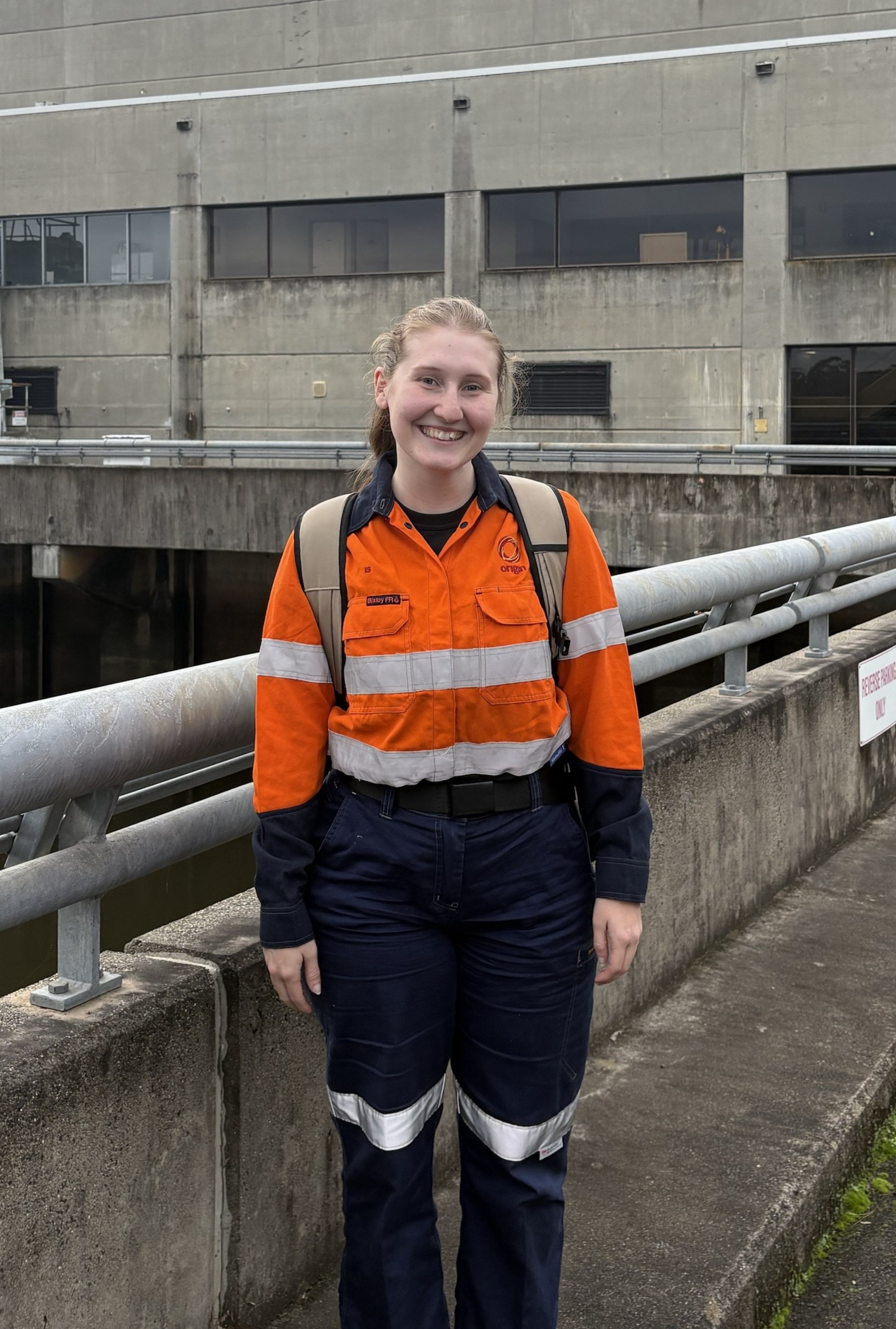
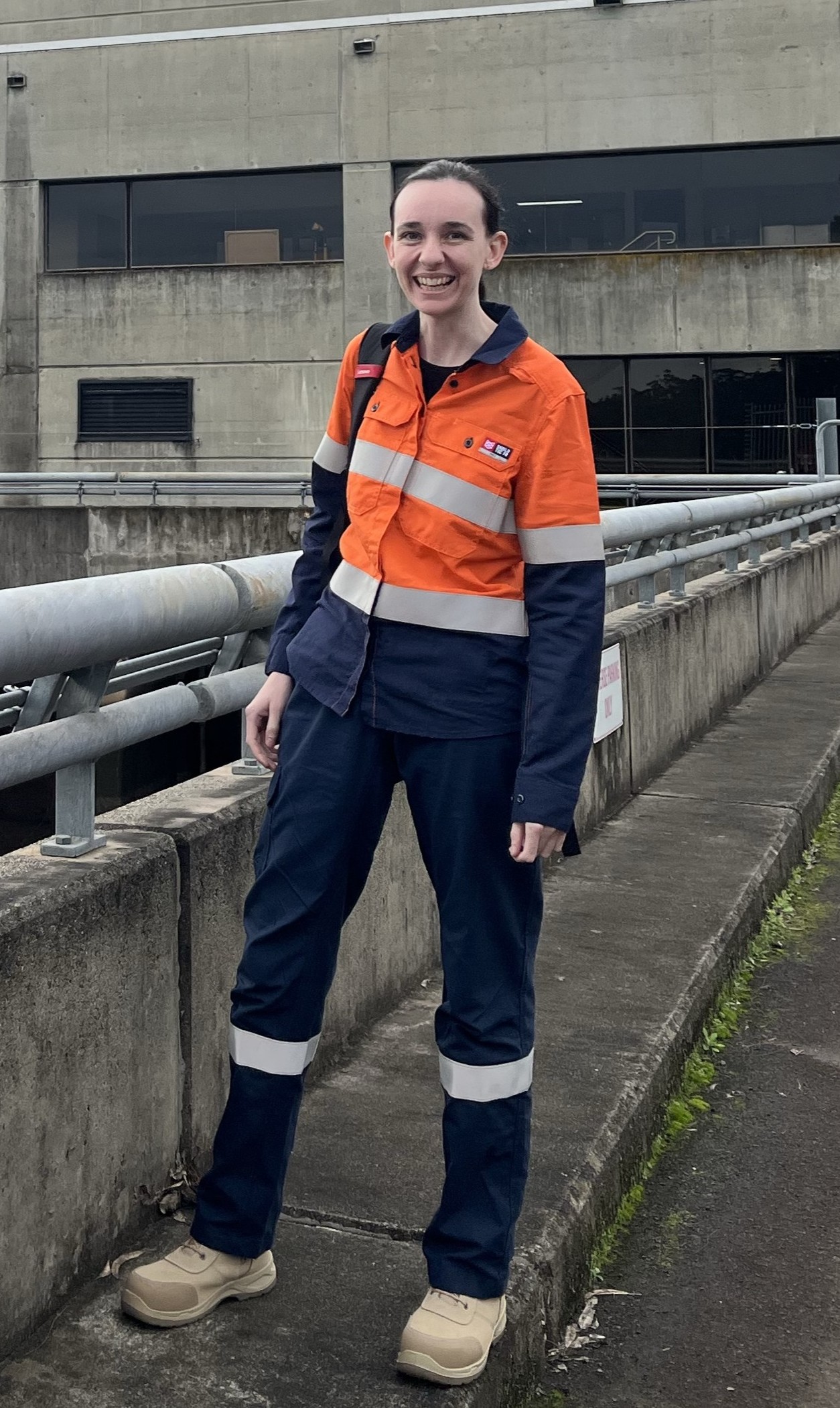
During a visit to the Shoalhaven pumped hydro plant in New South Wales, Anna got to see the enormous scale of electricity generation firsthand.
At university, she’d worked with small electric motors and copper windings that could fit in her hands.
At Shoalhaven, she found herself standing inside a generator component the size of a room.
“To go from our unit where we held our own DC motors in the equivalent of a large lunch box […] to standing in between the windings of one of the hydro generators in a stator the size of a room, was awe inspiring.”
Suddenly, the engineering concepts she’d spent hours studying weren’t just diagrams in a textbook.
For Issy, moving between AEMO and Origin has also changed how she understands the industry.
Before her internship, she assumed electricity followed a relatively simple process: generate it, send it out and sell it.
She’s since discovered how many different systems, organisations and people are involved in getting electricity from a power station to homes and businesses.
And learning all of that hasn’t always been easy.
After spending six months getting comfortable at AEMO, Issy initially found it daunting to move to Origin and learn an entirely new set of processes.
But she soon realised the skills she’d developed were transferable, and that starting somewhere new didn’t mean starting from scratch.
Being a woman in engineering
When Anna studied engineering at high school, she was the only girl in her class.
Although she got along well with her classmates, she remembers feeling pressure to fit in.
“I sort of felt like I had ‘snuck in’ and didn’t want to be caught out.”
That feeling stayed with her when she first considered engineering as a career.
Through her internship, however, Anna has met women working across different engineering roles who’ve helped change her perspective.
Seeing them approach their work in their own ways has given her more confidence to do the same.
Issy has a similar message for young women considering engineering.
She points out that the subject which helped her most at school wasn’t necessarily one you’d expect.
It was learning another language.
Engineering involves picking up unfamiliar terms, understanding complicated concepts and constantly learning new things. For Issy, studying a language helped develop those skills.
Her advice is to give engineering a go, even if you don’t fit the image of an engineer you might have in your head.
“Your background gives you a different perspective, and different perspectives lead to new ideas. That’s really what engineering is all about.”
So, what’s next?
For Issy, the goal is to help make reliable, renewable electricity more accessible to regional and lower socio-economic communities.
She’d also love to become a principal engineer one day and encourage more women to enter the industry.
But for now, there’s still plenty to learn.
Her advice for students considering engineering or applying for an internship is simple: take opportunities when they come, ask questions and don’t be afraid to make mistakes.
“Early career is the perfect time to ask questions, make mistakes and grow.”
And if you’re still at school wondering whether engineering might be for you, Issy and Anna’s experiences are a good reminder that you don’t need to have your entire career mapped out before you begin.
You might even find your favourite subject or future career somewhere you weren’t expecting.
Interested in engineering and Australia’s energy future?
Explore the different career pathways and opportunities available with AEMO.