There is a very specific kind of energy required to wake up at 2:00 AM every single morning to work with 950 cows. For Charlotte Maslen, it’s just a standard Tuesday.
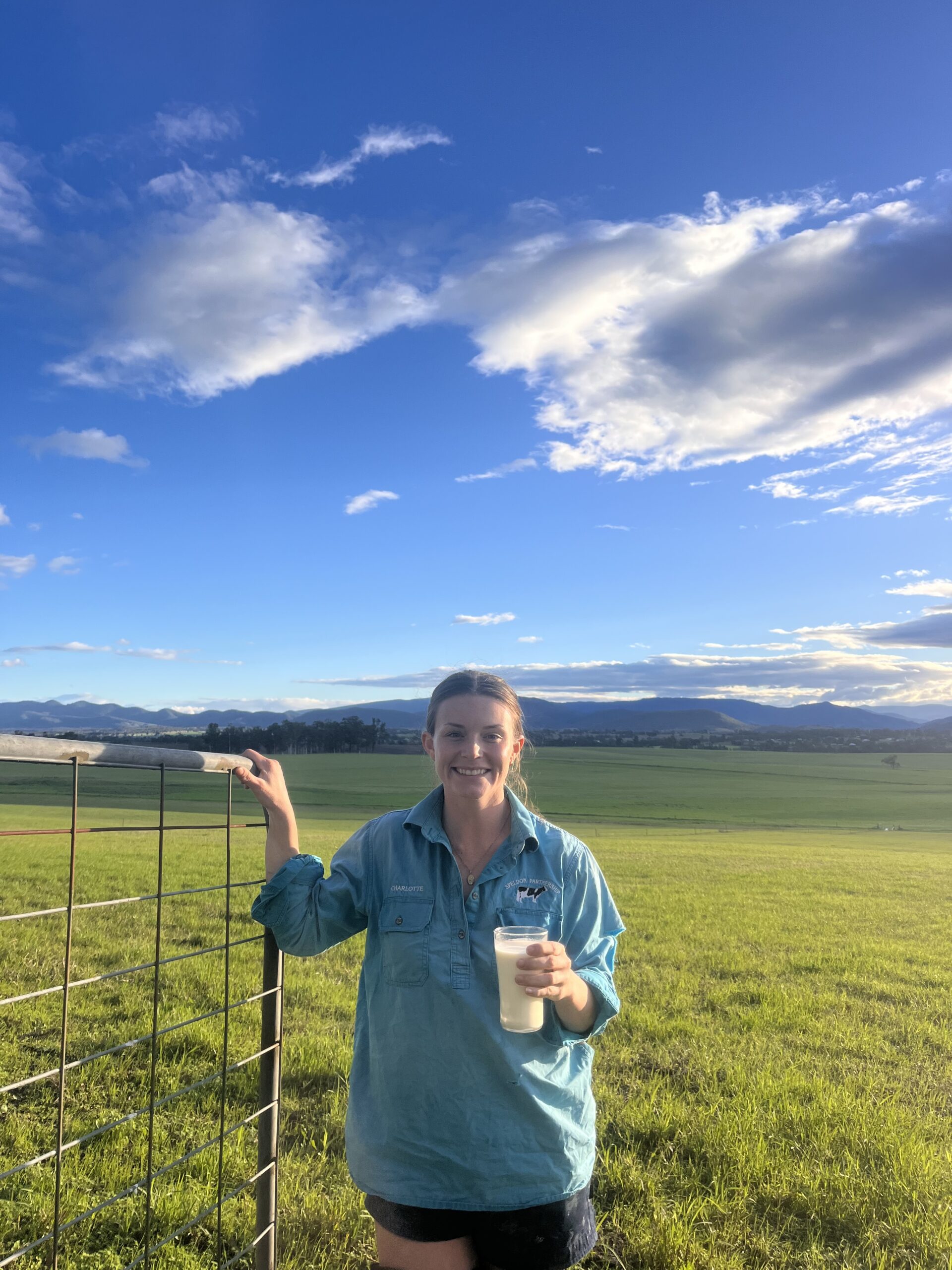
Based out in Gloucester, right in the foothills of the Barrington Tops, Charlotte spends her days managing a massive 2,000-hectare dairy farm. It’s a job that involves a lot of moving parts, including pasture quality checks, soil testing, herd health, and navigating a couple of very enthusiastic farm dogs who constantly try to steal the front seat of the ute.
We had a chat with her about what life on a dairy farm looks like on the daily, the tech keeping the herd healthy, and why the community keeps people in the industry for life.
The Tech Keeping the Herd Healthy
One of the first things you notice out on the paddocks is that the cows are all wearing collars. They’re essentially high-tech Fitbits built for livestock, and they handle a huge chunk of the health tracking on-site.
The collars monitor everything from eating habits to daily movement. If a cow starts coming down with something, her activity drops. Long before she looks sick to the human eye, the data flags it.
“We’ll have a Fitbit on them their entire life to make sure that they are in good health,” Charlotte says. “It gives me an alert, basically the same as what you would have on an Apple Watch or something like that. If a cow starts to drop her activity, we’ll get an alert back at base and then it will tell us to go and check her.”
The 7:00 AM Breakfast Club
While the 2:30 AM milking start is brutal, the payoff comes a few hours later. By 7:00 AM, the morning shift wraps up, and the entire team hits the pause button to eat breakfast together and plan out the rest of the day’s duties.
That sense of community is massive out here, and it extends way past the farm gates. A modern dairy farm relies on a massive network of off-farm support to keep running, meaning the career paths in the sector go way beyond traditional farming.
“We have a really, really great support network in dairy, and there’s lots of off-farm opportunities,” Charlotte notes. “We need so many other supporters, like mechanics and electricians coming into dairy as service providers. I have had the experience in other agricultural industries, but you find when people come into dairy, they understand it’s something that you can’t really describe until you’ve worked in it.”
Building a Connection With the Herd
If you spend five minutes watching Charlotte work, it’s obvious how much she likes the animals. She admits she spends a good chunk of her day talking to them, and because they’ve known her since they were heifers, they’re incredibly quiet and comfortable around people.
Instead of her having to trudge through the mud to round them up, they usually just wander over to say hello. Charlotte was trying to show the pasture views on camera, but the rain started pouring and the herd completely swarmed her, blocking the view.
Between the unpredictable weather, the ag-tech integrations, and the sheer scale of managing 2,000 hectares, it’s an industry that keeps you on your toes. For Charlotte, there’s nowhere else she’d rather be.
Curious about where a career in agriculture could take you? Head over to Dairy Australia to learn more or check out their career page to explore current industry roles, training pathways, and regional opportunities.