Airservices Australia manages 11% of the world’s airspace. That’s millions of flights a year, across two major air traffic services centres in Melbourne and Brisbane, 29 control towers, and 27 of Australia’s busiest airports where our aviation rescue and firefighting teams are on the ground.
Behind the scenes, we install and maintain the navigation, communication and surveillance infrastructure that keeps it all connected.
What makes Airservices different is how much of the aviation ecosystem we touch. We work with major commercial airlines, recreational pilots, and a growing wave of new airspace users like drones and remotely piloted aircraft. It’s a genuinely complex airspace, and it’s only getting busier.
A big part of our work right now is preparing for that future. Our flagship program, OneSKY, is transforming air traffic management in partnership with the Department of Defence. It will deliver over $1.2 billion in economic benefits to Australian airspace users over 20 years, replacing existing systems with an advanced integrated system that improves efficiency and strengthens national security.
We’re also developing our Integrated Airspace Program (IAP), testing and prototyping solutions to safely bring new airspace users into low and high-altitude airspace. Think drone surveillance, flight information systems, and research into stratospheric operations.
If you want to be part of the team making all of that happen, you’re in the right place.
What We Do
Our work spans three core areas, and together they cover everything that keeps Australian aviation moving safely.
Air Traffic Management
Air Traffic Management is at the heart of what we do. Our air traffic controllers use world-class technology to manage the safe and efficient movement of aircraft through Australian airspace, from pushback to touchdown. With more than 156 million airline passengers passing through our airspace every year, the work demands sharp thinking, fast decision-making, and complete focus.
Aviation Rescue Fire Fighting (ARFF)
Aviation Rescue Fire Fighting (ARFF) puts our teams on the front line at 27 airports across Australia. Our ARFF crews respond to aircraft emergencies and provide rescue and firefighting services, operating in one of the most specialised environments in emergency services. Our ARFFS is one of the world’s largest, with more than 900 operational and support personnel.
Support Services
Support Services connect the entire operation. Our technical officers maintain the radar systems, communication networks, navigation aids, and aeronautical data that pilots and controllers rely on around the clock. Our engineers, data specialists, IT professionals, project managers, and corporate teams provide the essential support that keeps everything running.
We are also currently delivering the OneSKY Australia program, Australia’s first harmonised civil and military air traffic management system, in partnership with the Department of Defence. It is a world-first program and one of the most significant technology undertakings in our history.
Life at Airservices Australia
Our culture
At Airservices Australia, we promote a culture of trust, accountability and inclusion. As part of our ongoing Culture Improvement journey, we are committed to creating a workplace that is safe, respectful, and psychologically secure, where our people feel valued, supported and able to do their best work.
We are united by a strong sense of purpose in serving the aviation industry and the Australian community. We invest in leadership capability, learning and development, role clarity, and flexible working to support wellbeing and high performance.
Service first: serving our people, serving our customers
Love what we do: purpose-driven, capable, valued
Diversity and inclusion
Our teams operate from locations across the country, from major cities to regional and remote communities. We are committed to a culture of fulfilment and growth, ensuring our workplaces are diverse, inclusive, and respectful. We continue to focus on improving gender equality and have published our gender pay gap statement, which includes the results of our 2024 pay data submission to the Workplace Gender Equality Agency.
Benefits
We offer competitive compensation and salary packaging, flexible work arrangements, continual professional development, technical training, leadership development, and career progression pathways. We are also committed to supporting our people and their families through broadened leave and family policies.
Locations
With 29 locations across Australia, we provide a unique opportunity to take your career with you and experience rewarding work in regional, coastal and major metropolitan areas.
Air Traffic Controller
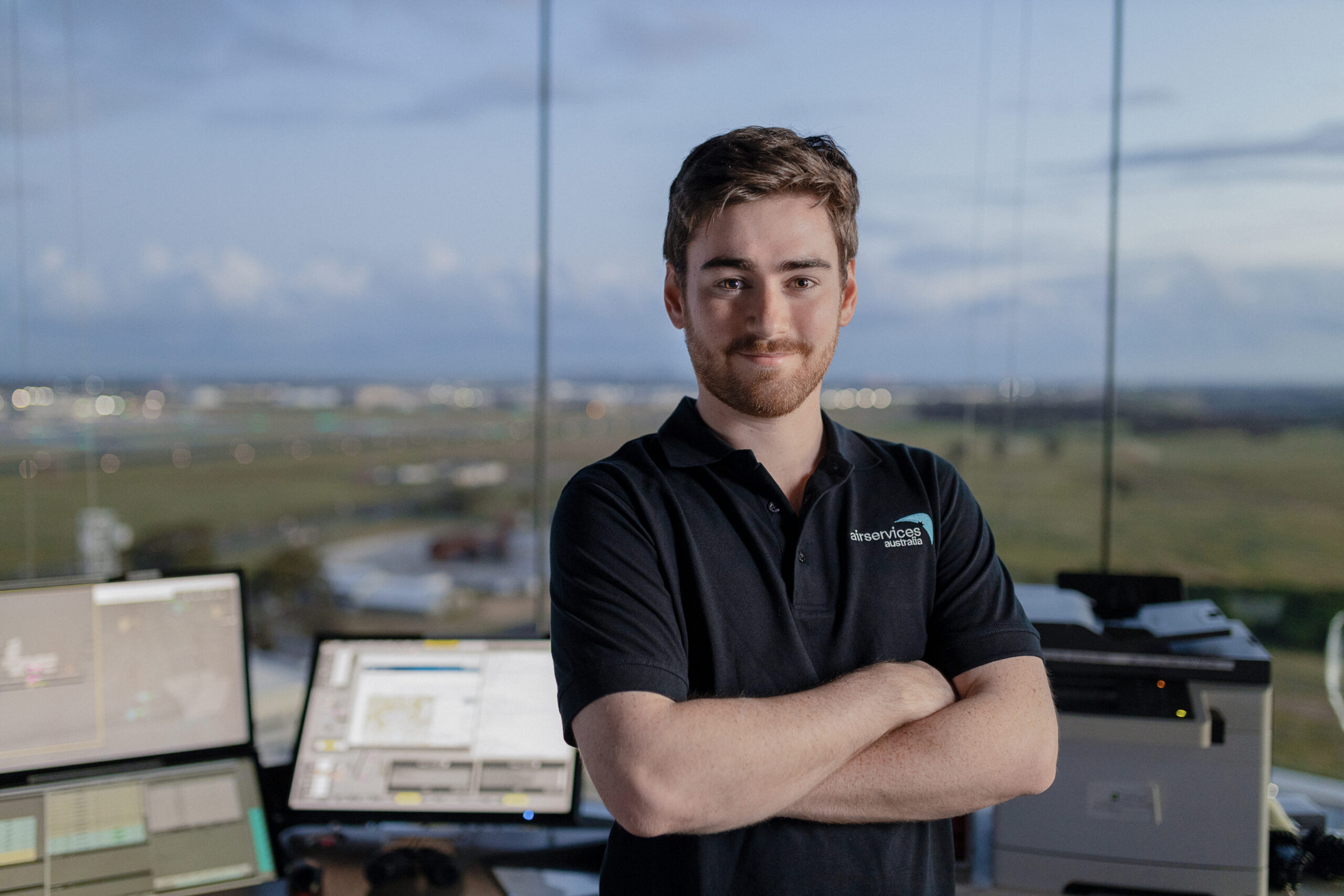
As an Air Traffic Controller, you will be part of a vital team that manages 11 per cent of the world’s airspace. Guided by world-class technology, you will ensure the safe, reliable and efficient movement of all aircraft operating in our skies. Connecting people with their world safely.
Air Traffic Controllers manage the safe and orderly flow of aircraft into, out of, and between airports throughout Australia and with overseas regions adjoining Australian airspace. Controllers are based around the country and work in one of our two major centres in Melbourne or Brisbane, two terminal control units, or 28 control towers at international and regional airports across Australia.
In addition to managing routine air traffic, controllers provide information and assistance to pilots during in-flight emergencies.
If you have previously been trained and rated as an Air Traffic Controller, you may be eligible to apply for a position as an experienced controller. If selected, you will first complete a short course (approximately six to 12 weeks) at our Learning Academy in Melbourne. Your remuneration will be consistent with your years of experience.
Eligibility
To be eligible to apply:
You must be an Australian or New Zealand citizen or hold permanent residency status in Australia, AND
You must have been employed as an operational air traffic controller within the last three years, OR
Been employed as an operational air traffic controller within the last five years AND been employed within an air traffic control field, such as instructing, during the remaining time.
Training
On commencement, you must attend induction and familiarisation training at our Melbourne facilities. During the recruitment process, we will complete an individual Training Needs Analysis to ensure you receive the appropriate level of training based on your experience.
Training at our Melbourne facilities will usually take between six and 12 weeks, followed by field training at your final location until you achieve a rating. All training costs, including accommodation in Melbourne and travel expenses, will be paid by Airservices. A training bond is applicable to recover these costs should you resign within the first five years.
Recruitment process
While every effort is made to keep the process as short as possible, it is thorough and will take some months to complete. Please allow up to six months. If successfully selected, you will be offered a specific commencement and course date, which may be a further three to 12 months away depending on availability.
Please note: due to the volume of applications received, we cannot accept emailed resumes or expressions of interest.
The steps:
Online application
Online ability assessments (verbal reasoning, numerical reasoning, numerical calculations and a checking test)
Our Air Traffic Controller in Training Program provides an excellent opportunity for candidates with no previous Air Traffic Control experience.
If selected, you will receive world-class training leading to the AVI50115 Diploma of Aviation (Air Traffic Control), a nationally recognised qualification developed specifically for the Australian aviation industry. You will be paid while you train and, on successful completion, will enjoy a career with excellent working conditions and competitive rewards and benefits.
You will commit to an initial 12-to-18-month training program at our Melbourne facilities before transitioning to your final field location.
To perform this critical role, you will need to demonstrate:
Good spatial awareness and strong mathematical skills
Excellent communication skills
The ability to work well under pressure and make quick, accurate decisions
The capability to plan ahead and adapt to changing situations
Enjoyment of taking charge and being accountable for your decisions
Willingness to work shift work 24/7, 365 days of the year
Ability to meet compulsory medical and security clearance requirements
Eligibility
Residency requirements: you must be at least 18 years of age and be an Australian or New Zealand citizen, or an Australian Permanent Resident.
Educational requirements: you must have completed a Senior Secondary Certificate of Education (Year 12 Certificate or equivalent), or tertiary level education at Diploma level at minimum.
Training
Training is face-to-face and consists of theory and practical components, with practical training conducted in air traffic control simulators. The program is approximately 12 months, with on-the-job training times varying thereafter.
Locations
If selected for Enroute training, you will be based in Melbourne or Brisbane. If selected for Tower, you could be posted to any of our 29 control towers. Where possible, we will attempt to accommodate your preference, but allocation is not guaranteed. Flexibility regarding location is expected.
The steps:
Online application form
Online ability assessments (verbal reasoning, inductive reasoning, numerical calculations, checking test and spatial test)
One-day Assessment Centre in a capital city (at your own cost)
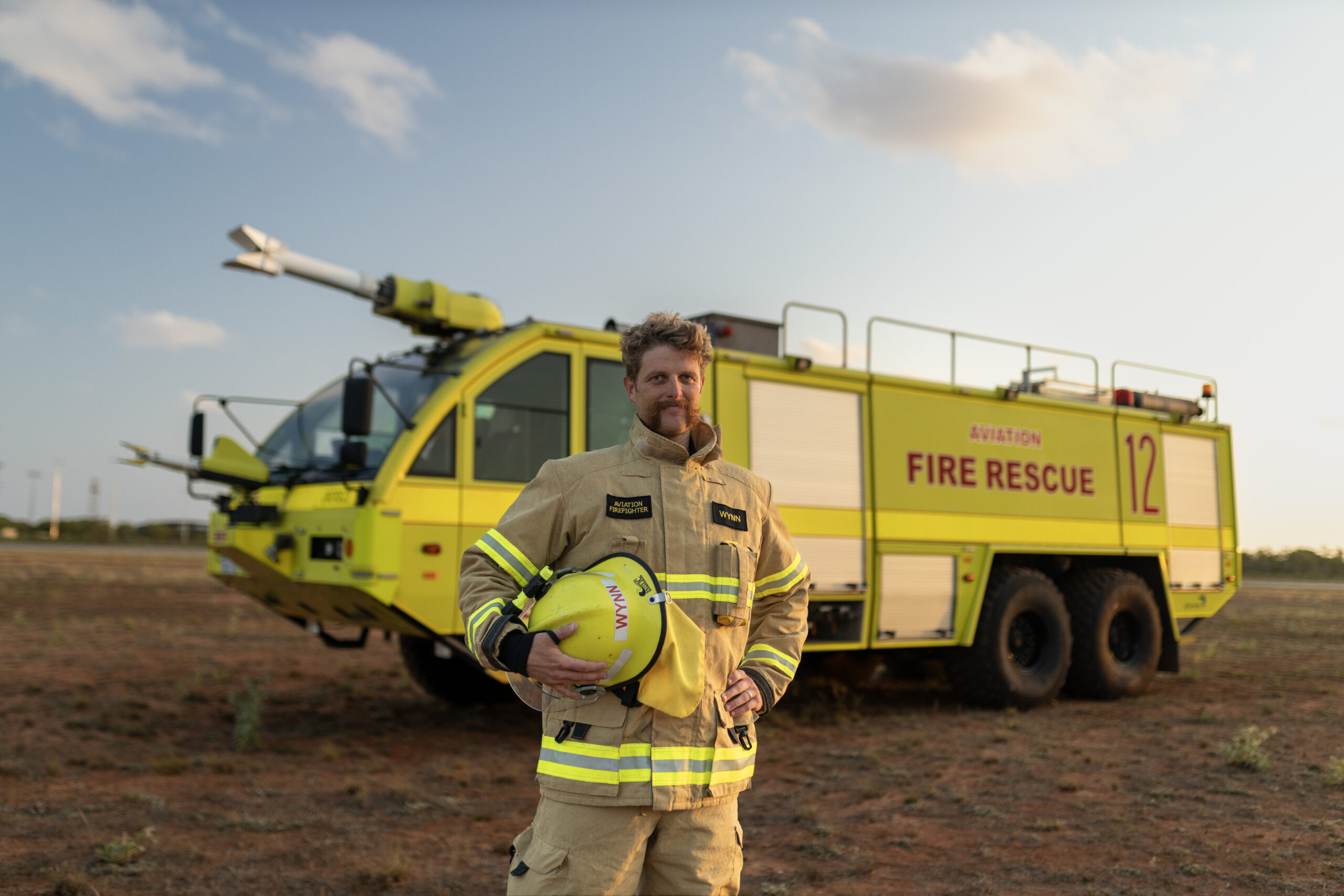
Our Aviation Rescue Fire Fighters work at 27 airports across Australia, responding to a broad range of aviation and airport emergencies and providing a vital layer of safety to the travelling public.
Our ARFFS is one of the world’s largest, with more than 900 operational and support personnel. It is physical, purposeful work in a dynamic outdoor team environment. Every fire station has an on-site gym with time for individual physical training built into every shift, and access to qualified physical training instructors.
To succeed in this career, you will need a high level of fitness, a commitment to ongoing physical and technical training, and comfort working outdoors.
Our ARFF Recruit program is the entry pathway for people with no prior aviation firefighting experience. Recruits complete an 11-week training program at our Melbourne Training Academy, earning a Certificate II in Public Safety (Fire) on completion.
Upcoming recruit courses:
RC108: July 2026
2027 courses will be confirmed in late 2026
Dates may change due to operational requirements.
Minimum entry requirements:
Be at least 18 years of age
Hold Australian or New Zealand Citizenship or Australian Permanent Residency (Darwin applicants must be Australian Citizens)
Hold a current unrestricted full manual driver’s licence and be able to obtain a Heavy Rigid licence at least four weeks prior to commencement
Hold either a Year 10 or Year 12 Certificate plus a minimum of two years full-time equivalent experience (paid work, volunteer work, professional or elite sports), OR a Bachelor’s or Master’s degree
You will also need to:
Obtain Medical Clearance prior to the Physical Aptitude Test
Pass a Physical Aptitude Test (PAT)
Obtain a current First Aid Certificate (HLTAID011 or HLTAID014) prior to Assessment Centre
Hold (or be able to obtain) a current water competency qualification if applying for water rescue-equipped locations
Pass a CASA Class II medical examination, drug and alcohol screening, and ASIC security check if successful
The recruitment process:
Online application
Online ability assessments
Physical Aptitude Test (PAT)
Assessment Centre
Reference checks
Medical and security checks
Start training in Melbourne
If you reach the Assessment Centre stage and are unsuccessful, you must wait 12 months before re-applying.
Airservices also recruits experienced firefighters to build and strengthen our ARFFS workforce with new skills and backgrounds.
Successful applicants complete a condensed training period to gain their Leading Fire Fighter classification. This training covers aerodrome and aircraft familiarisation, vehicle operations, ARFFS systems and governance, equipment, communications, strategy and tactics.
At Airservices Australia, we’re meeting the challenges of today while planning for the future. We’re partnering with world-leading companies, the aviation industry, regulators and other government agencies to integrate uncrewed aircraft systems and deliver a contemporary national air traffic management system.
We recruit a variety of enabling roles across the organisation, including engineers, program and technical specialists, and project coordinators. No matter what role you take on, you will ultimately play your part in the safe arrival and departure of more than 156 million airline passengers every year.
What we offer:
Role variety
Advanced technology
Competitive remuneration
Diverse and inclusive workplace
29 locations across Australia
Engineering and technical roles
We employ engineers across a wide range of disciplines: software, avionics, mechanical, electrical and electronics, civil, and systems engineering. Our technical officers maintain the radar systems, communication networks, navigation aids, and aeronautical data infrastructure that underpins everything we do across 29 locations nationally.
Professional and corporate roles
Our Information Management and Data Services team connects the Airservices information environment with all core operations, providing essential technology support, maintenance, and development. We also have growing roles across data analysis, cybersecurity, project management, policy, finance, customer engagement, and communications.
As Virdeep Kaur, one of our Technical Officers, puts it: “We monitor all the technology related to the aviation industry, 24 hours a day, 365 days a year. To keep service first, to keep the sky safe for everyone out there.”